Yale ECON 252: Financial Markets
Instructions
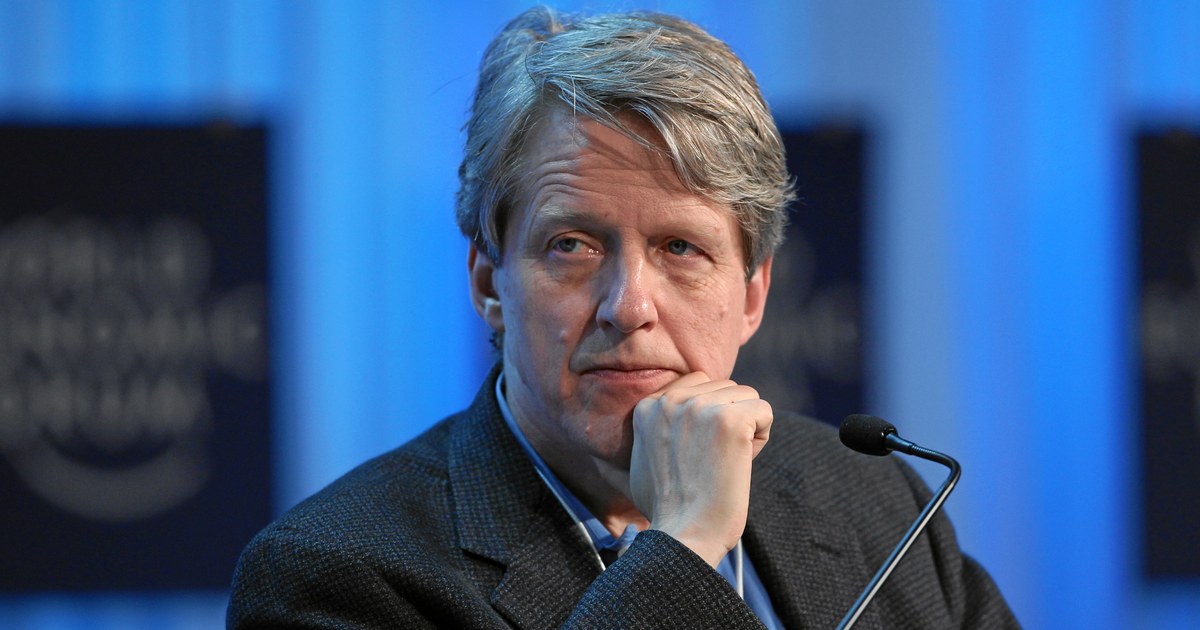
Yale ECON 252 Financial Markets is an overview of the ideas, methods and institutions that let society manage risk and support enterprise. It describes how financial markets work today, and uses risk management and behavioral finance to explain securities, insurance and banking. This version was recorded in Spring 2011 for Open Yale Courses, licensed CC BY-NC-SA. Original link https://oyc.yale.edu/economics/econ-252 Instructor Robert J. Shiller, Arthur M. Okun Professor of Economics, Yale University (Nobel Prize in Economics, 2013) Main topics (23 lectures) - Risk and financial crises, technology and invention in finance - Portfolio diversification, insurance as risk management - Efficient markets, behavioral finance and the role of psychology - Debt and leverage cycles, corporate stocks, real estate - Banks, investment banks, monetary policy and regulation - Forward and futures markets, options markets - Professional money managers, exchanges, brokers, dealers and clearinghouses - Public and non-profit finance, and finding your purpose in a world of financial capitalism - Guest lectures by David Swensen (Yale endowment), Maurice "Hank" Greenberg (AIG) and Laura Cha
Contents · 33
- 01-Introduction and What this Course Will Do for You and Your PurposesIntroduces Financial Markets, covering finance’s role in society, major institutions and risks, global perspectives, recent crises, and how the course differs from financial theory.
- 02-Risk and Financial CrisesIntroduces probability, variance, covariance, regression, and financial risk through the 2007 crisis, highlighting failures of independence and fat-tailed distributions.
- 02-Risk and Financial CrisesExplains expected returns, variance, covariance, and correlation, then uses stock data and distribution charts to examine market risk and fat tails.
- 03-Technology and Invention in FinanceFinancial engineering, behavioral finance, risk, and incentives; reviews probability concepts including returns, distributions, correlation, and market risk.
- 04-Portfolio Diversification and Supporting Financial InstitutionsThe history of the VOC and Amsterdam Stock Exchange, including the origins of stock trading, brokerage, and short selling.
- 04-Portfolio Diversification and Supporting Financial InstitutionsPortfolio risk and return, diversification across risky assets, efficient frontiers, Sharpe ratios, beta, and the CAPM.
- 05-Insurance, the Archetypal Risk Management Institution, Its Opportunities and VulnerabilitiesIntroduces insurance as risk pooling, traces its historical development, and outlines AIG, insurance regulation, policy types, and the role of insurance in managing catastrophe.
- 06-Guest Speaker David SwensenDavid Swensen discusses Yale’s endowment strategy, the Yale Model’s use of alternative investments, and criticism of its liquidity and diversification after the financial crisis.
- 07-Efficient MarketsExplains the efficient markets hypothesis and Yale’s investment performance, then examines Sharpe ratios, risk measurement in private assets, and strategies that can inflate apparent risk-adjusted returns by selling tail risk.
- 08-Theory of Debt, Its Proper Role, Leverage CyclesIntroduces theories of interest rates, including Fisher’s savings supply-and-demand model, time preference, productivity, present values, bonds, term structure, and forward rates.
- 09-Corporate StocksHow corporations issue shares, divide ownership, and use legal agreements to manage conflicts, alongside the scale of global stock markets and their value relative to GDP.
- 09-Corporate StocksExplains corporate stocks through market capitalization, company balance sheets, shares outstanding, and stock price histories for Xerox and Microsoft.
- 10-Real EstateHistory of mortgage lending, from ancient trade finance and medieval contracts to modern property-title systems.
- 10-Real Estate
- 11-Behavioral Finance and the Role of PsychologyBehavioral finance examines how psychology, imperfect rationality, morality, and social approval shape financial behavior and institutions.
- 12-Misbehavior, Crises, Regulation and Self RegulationFinancial regulation addresses misconduct, consumer vulnerabilities, monopolies, externalities, and systemic risk. The lecture compares microprudential and macroprudential oversight and the role of regulators.
- 13-BanksCovers traditional banks’ core activities, including lending, deposits and note issuance, and outlines the lecture’s topics: banking history, fractional reserves, deposit insurance, regulation, shadow banking and financial crises.
- 14-Guest Speaker Maurice Hank GreenbergHank Greenberg’s military service, entry into insurance, underwriting experience, and turnaround of American Home through changes to its agency network.
- 14-Guest Speaker Maurice Hank GreenbergCovers the Black–Scholes formula, put-call parity, and implied versus historical S&P 500 volatility.
- 15-Forward and Futures MarketsIntroduces futures and forward markets, explains derivatives and speculation, and discusses their role in forecasting and the economy.
- 15-Forward and Futures Markets
- 16-Guest Speaker Laura ChaLaura Cha discusses careers in financial services, emphasizing the role of regulators and policymakers in market integrity, investor protection, and corporate governance.
- 17-Options MarketsDefines call and put options, exercise prices and dates, and American versus European exercise rights; introduces option value, real-world examples, and the purposes of options in financial markets.
- 17-Options Markets
- 18-Monetary PolicyThe origins of central banking, from the Bank of England and Suffolk Bank to their role in stabilizing banks and shaping modern central banks.
- 19-Investment BanksInvestment banking’s role in raising capital through securities underwriting, IPOs, and seasoned offerings; how it differs from trading and commercial banking; and its role in due diligence and limiting moral hazard.
- 20-Professional Money Managers and Their InfluenceInstitutional investors’ growing role in managing U.S. wealth, including pension funds, mutual funds, and insurance reserves, and the shift from family to professional and institutional responsibility.
- 20-Professional Money Managers and Their InfluenceExamines professional money managers’ influence and household wealth, assets, and liabilities.
- 21-Exchanges, Brokers, Dealers, ClearinghousesIntroduces exchange as central to economics, then explains brokers and dealers through examples from financial and other markets.
- 21-Exchanges, Brokers, Dealers, ClearinghousesExplains the roles of exchanges, brokers, dealers, and clearinghouses, with a hypothetical Microsoft limit order book.
- 22-Public and Non-Profit FinanceNonprofit organizations, their financing and governance, government involvement in for-profit firms, public project finance, and social insurance.
- 23-Finding Your Purpose in a World of Financial CapitalismSummarizes finance as a tool for purposeful living, covering its morality, economic role, financial theory, wealth and poverty, future technological changes, democratization, and career choices.
- BIS, ECB, ESRBInternational financial and banking authorities: the BIS, ECB and ESRB.