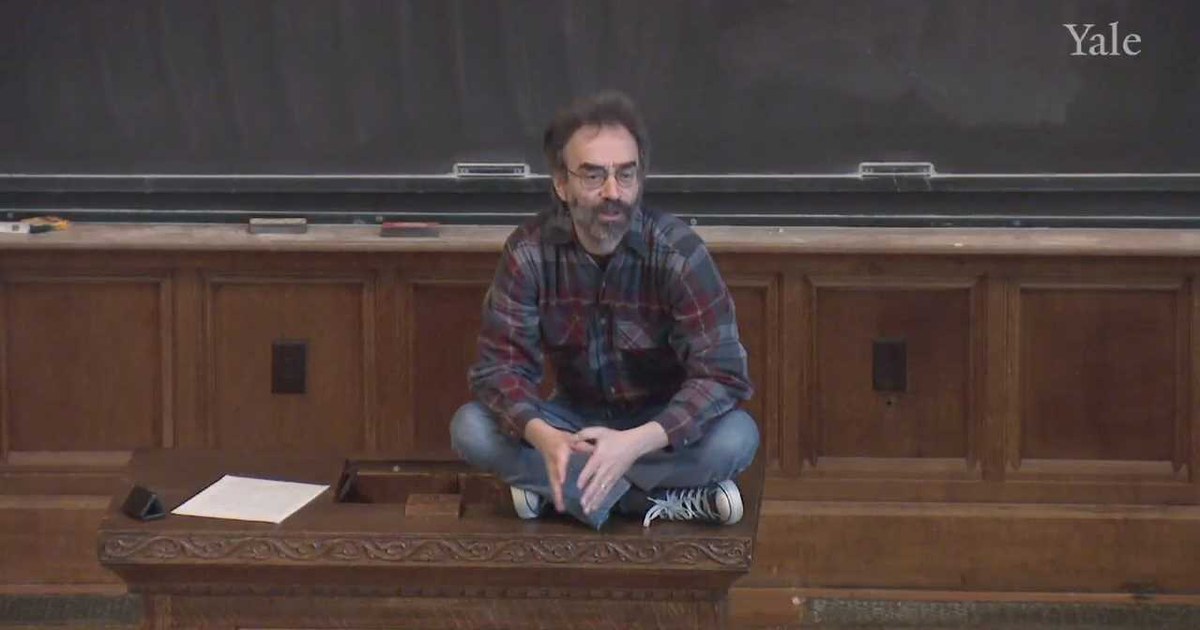
Yale PHIL 176: Death
Instructions
Yale PHIL 176 Death is a philosophy course about the questions that come up when we think about our own mortality. Is there life after death? Would immortality be good? What does it mean for a person to die? Is death bad, and why? Is suicide rational or morally permissible? How should the knowledge that we will die change the way we live? Recorded in Spring 2007 for Open Yale Courses, licensed CC BY-NC-SA. Original link https://oyc.yale.edu/death/phil-176 Instructor Shelly Kagan, Clark Professor of Philosophy, Yale University Main topics (26 lectures) - The nature of persons: dualism vs. physicalism - Arguments for the existence of the soul, including free will and near-death experiences - Plato's Phaedo and its arguments for the immortality of the soul - Personal identity: the soul theory, the body theory, the personality theory, and what matters - The nature of death, and believing you will die - The badness of death: the deprivation account, the value of life, other bad aspects of death - Immortality: would living forever be desirable? - Fear of death, and how to live given the certainty of death - Suicide: its rationality, deciding under uncertainty, and its morality
Contents · 41
- 01-Course IntroductionIntroduces philosophical questions about death, including souls, personal identity, survival, death’s value, immortality, mortality, and suicide.
- 02-The Nature of Persons: Dualism vs. PhysicalismIntroduces the question of life after death through the nature of persons and personal identity, then presents the objection that survival after death is impossible by definition.
- 02-The Nature of Persons: Dualism vs. Physicalism
- 03-Arguments for the Existence of the Soul, Part IExplains physicalism’s view of persons as bodies with person-level abilities, and minds as the mental functions those bodies perform.
- 04-Introduction to Plato's Phaedo; Arguments for the Existence of the Soul, Part IIIntroduces Plato’s Phaedo, its dialogue form, Socrates as Plato’s character, and how to interpret the arguments and philosophical views presented.
- 04-Introduction to Plato's Phaedo; Arguments for the Existence of the Soul, Part II
- 05-Arguments for the Existence of the Soul, Part III: Free Will and Near-Death ExperiencesExamines the argument that free will requires an immaterial soul, defining determinism and outlining challenges to the argument’s premises.
- 05-Arguments for the Existence of the Soul, Part III: Free Will and Near-Death Experiences
- 06-Arguments for the Existence of the Soul, Part IV; Plato, Part IDescartes’ argument that the mind can exist apart from the body, and a counterexample involving the Morning and Evening Star.
- 07-Plato, Part II: Arguments for the Immortality of the SoulPlato’s Forms, the contrast between eternal abstract realities and changing physical things, and how this metaphysics supports the soul’s immortality and Socrates’ calm acceptance of death.
- 07-Plato, Part II: Arguments for the Immortality of the Soul
- 08-Plato, Part III: Arguments for the Immortality of the Soul (cont.)Challenges to Plato’s recollection argument and the claim that the soul’s existence before birth proves it survives death.
- 08-Plato, Part III: Arguments for the Immortality of the Soul (cont.)
- 09-Plato, Part IV: Arguments for the Immortality of the Soul (cont.)Critiques Plato’s argument that the soul’s invisibility implies it is changeless, simple, and indestructible, and revisits the analogy between the soul and a harp’s harmony.
- 09-Plato, Part IV: Arguments for the Immortality of the Soul (cont.)
- 10-Personal Identity, Part I: Identity Across Space and Time and the Soul TheoryPersonal identity over time, physicalism, and what it means to survive bodily change or death.
- 10-Personal Identity, Part I: Identity Across Space and Time and the Soul Theory
- 11-Personal Identity, Part II: The Body Theory and the Personality TheoryCompares soul and body theories of personal identity and examines how bodily resurrection could permit survival after death.
- 12-Personal Identity, Part III: Objections to the Personality TheoryBernard Williams’ mind-swap thought experiment tests whether personal identity follows the body or the personality, using first-person concern about who would be tortured.
- 12-Personal Identity, Part III: Objections to the Personality Theory
- 13-Personal Identity, Part IV: What Matters?The duplication problem for personality theories of personal identity, the no-branching rule, and the body-view response.
- 13-Personal Identity, Part IV: What Matters?
- 14-What Matters (cont.); The Nature of Death, Part I
- 14-What Matters (cont.); The Nature of Death, Part IExplains why survival may not preserve what matters, then uses gradual personality change in the Methuselah case to challenge the personality theory of identity.Explores whether survival matters without continuity of personality, using gradual change in the Methuselah case to challenge the personality theory of identity.
- 15-The Nature of Death (cont.); Believing You Will DieExplains why personhood-based death cannot mean a lapse in functioning, and proposes inability to engage in person-functioning as the distinction between being alive and dead. Applies the view to sleep, resurrection, and coma.
- 16-Dying Alone; The Badness of Death, Part IExamines whether people truly believe they will die, using Ivan Ilyich, compulsive behavior, and reactions to near-death experiences as evidence.
- 17-The Badness of Death, Part II: The Deprivation Account
- 17-The Badness of Death, Part II: The Deprivation AccountExplains how death can be bad for the person who dies, distinguishing death’s central harm from the pain of dying and the distress of anticipating it.
- 18-The Badness of Death, Part III; Immortality, Part IExplores whether death harms the deceased by depriving them of life’s goods, and how existence requirements address the puzzle of harm to the dead and never-born.
- 19-Immortality Part II; The Value of Life, Part IKagan argues that no imaginable mix of activities, relationships, or careers would remain desirable forever, supporting Williams’s view that immortality would become a nightmare.
- 20-The Value of Life, Part II; Other Bad Aspects of Death, Part I
- 20-The Value of Life, Part II; Other Bad Aspects of Death, Part IExplains how the experience machine challenges hedonism and highlights accomplishments, knowledge, and loving relationships as possible sources of well-being beyond pleasurable experiences.
- 21-Other Bad Aspects of Death, Part IIConsiders whether knowing when death will occur would help or burden us, and how awareness of limited time shapes life choices and priorities.
- 22-Fear of DeathExplores whether fear of death is a rationally appropriate emotion and how death should influence our attitudes and lives.
- 23-How to Live Given the Certainty of DeathExplores how mortality should shape the way we live, focusing on choosing worthwhile aims, pursuing them well, and the risk of running out of time to correct mistakes.Explores how mortality should shape our choices and actions, and the risk of running out of time to correct mistakes.
- 23-How to Live Given the Certainty of Death
- 24-Suicide, Part I: The Rationality of Suicide
- 24-Suicide, Part I: The Rationality of Suicide
- 25-Suicide, Part II: Deciding under UncertaintyHow the timing and overall balance of good and bad life stages affect whether suicide is rational.
- 25-Suicide, Part II: Deciding under Uncertainty
- 26-Suicide, Part III: The Morality of Suicide and Course ConclusionExamines how consequentialist moral theories assess suicide, weighing benefits to the person against grief for family and loved ones.