Bloom's taxonomy questions on any topic
Name a topic or add your material. Winda writes 12 questions in the order of Bloom's levels, each marked with its level, so you see where your understanding stops.
Free to start · No credit card needed
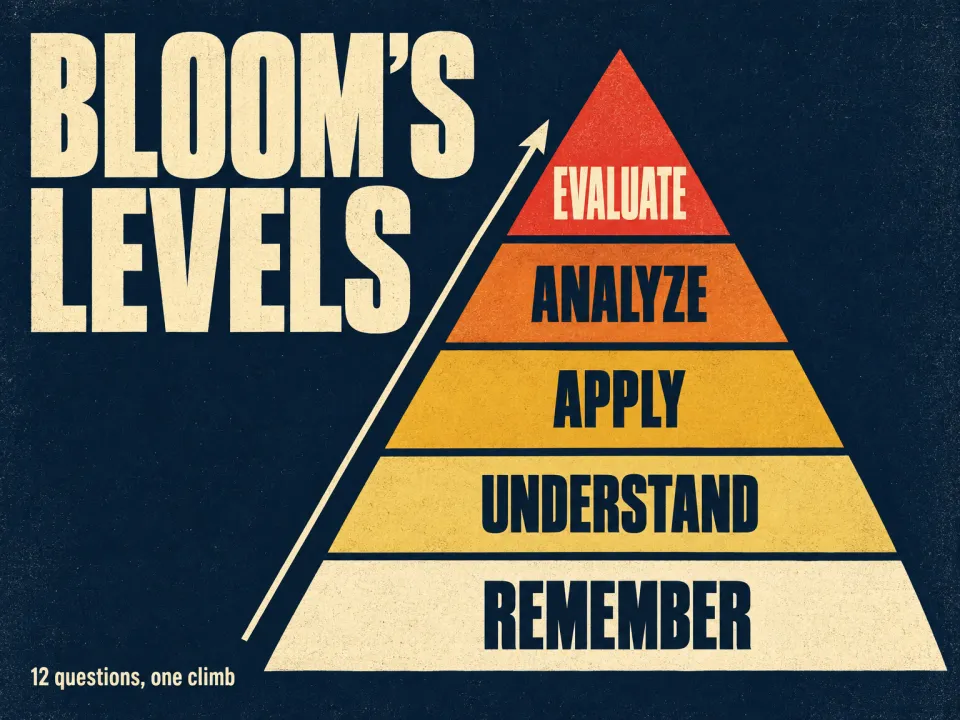
What you get
- Remember and understand
- Four questions: recall a fact or a definition, then pick the correct restatement or example.
- Apply
- Three questions that give a short new situation and ask you to use the idea in it.
- Analyse and evaluate
- Five questions: find the cause, the assumption or the part that does not fit, then pick the best-supported judgement.
- An explanation for each
- What the level asked you to do, why the answer is right and why each tempting option is wrong.
What Bloom's taxonomy is
Bloom's taxonomy is a scale of what a learner can do with knowledge. A group led by the educational psychologist Benjamin Bloom published it in 1956, and it was revised in 2001. The revised levels are remember, understand, apply, analyse, evaluate and create. Each level needs the ones below it.
The scale explains a common surprise. You read a chapter, you can repeat its definitions, and the exam asks you to use them on a case you have never seen. That is two levels up. Most self-made quizzes and most flashcards test the first level only, so they tell you that you are ready when you are not.
A quiz ordered by level shows where you stop. If you get the first four questions right and the application questions wrong, you do not need to read the chapter again. You need practice with problems. The quiz covers five levels. The sixth, create, means to make something new, and a multiple-choice question cannot test it: for that level, write or build something and ask Winda for feedback.
How it works
Say what it is about
Name a topic, or add a PDF, a lecture video, an article or your own notes. With files, the result is written from them.
Winda makes it
The template sets the form, so you do not write a prompt. You choose the model that does the work: Claude, GPT, Gemini and others.
Keep it and change it
The result is saved in your project beside your files and chats. Ask for a change in the chat, or make flashcards and a quiz from the same material.
Questions
Questions at the upper levels of Bloom's taxonomy: apply, analyse and evaluate. You cannot answer them from memory alone, because they give you a situation or evidence that is not in the material word for word.
Yes, when it gives new material to work on, such as a case, a set of data or an argument, and the options are conclusions about it. One option is correct on the material.
Yes. Add your notes, a chapter or a lecture to a project and name the file. The questions cover that material, and you can add them to your practice.
More templates
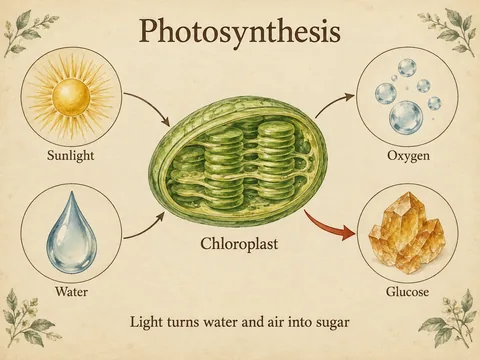 Concept mapOne idea in the center, its parts around it, and arrows that say how they relate.
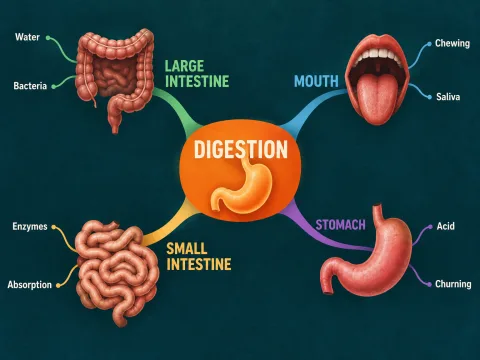 Mind mapA topic in the center, four or five colored branches and the twigs on each.
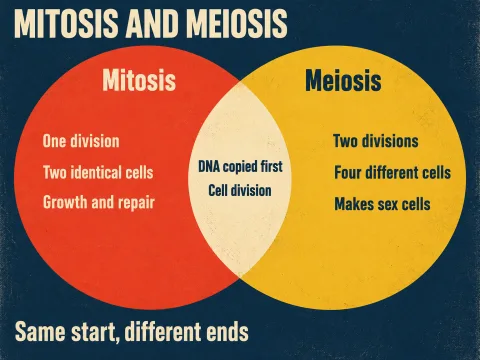 Venn diagramWhat two things share and where they differ, in two overlapping circles.
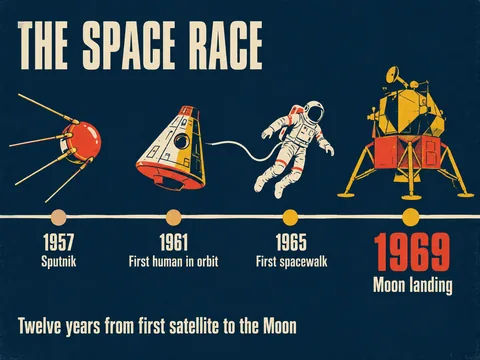 TimelineThe events of a period in order along one line, each with a picture.
Learn deeply. Create freely.
A learning space to read, chat and create.
Free to start · No credit card needed